Research
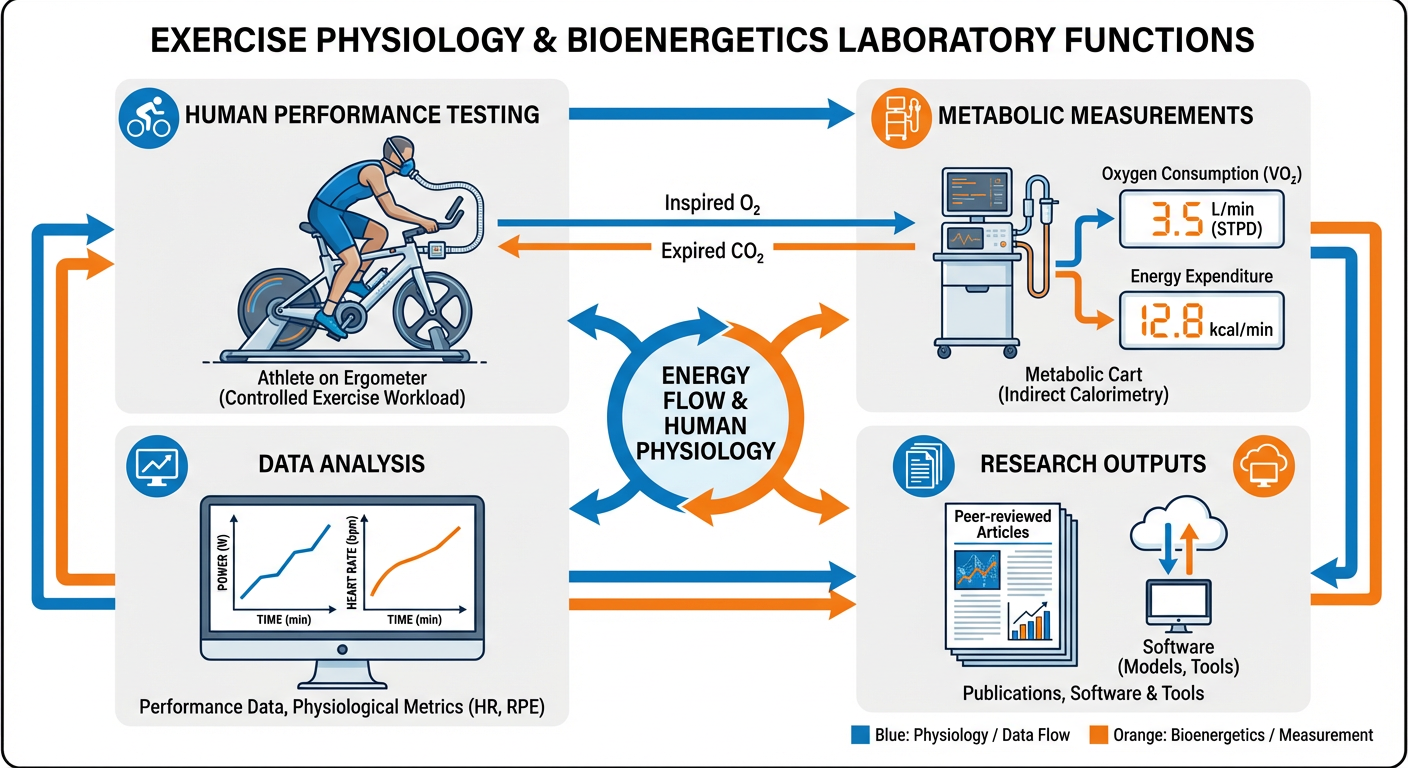
Our laboratory specializes in integrative physiology and bioenergetics. Our core mission is to understand the bioenergetic mechanisms of exercise—specifically how the body produces, transports, and utilizes energy—to optimize sports performance, improve recreational physical activity, and support cardiovascular prevention and rehabilitation.
We integrate data from metabolic and cardiorespiratory systems to analyze how they interact to support muscle contraction and energy production (ATP).
Research Themes
Integrative Bioenergetics
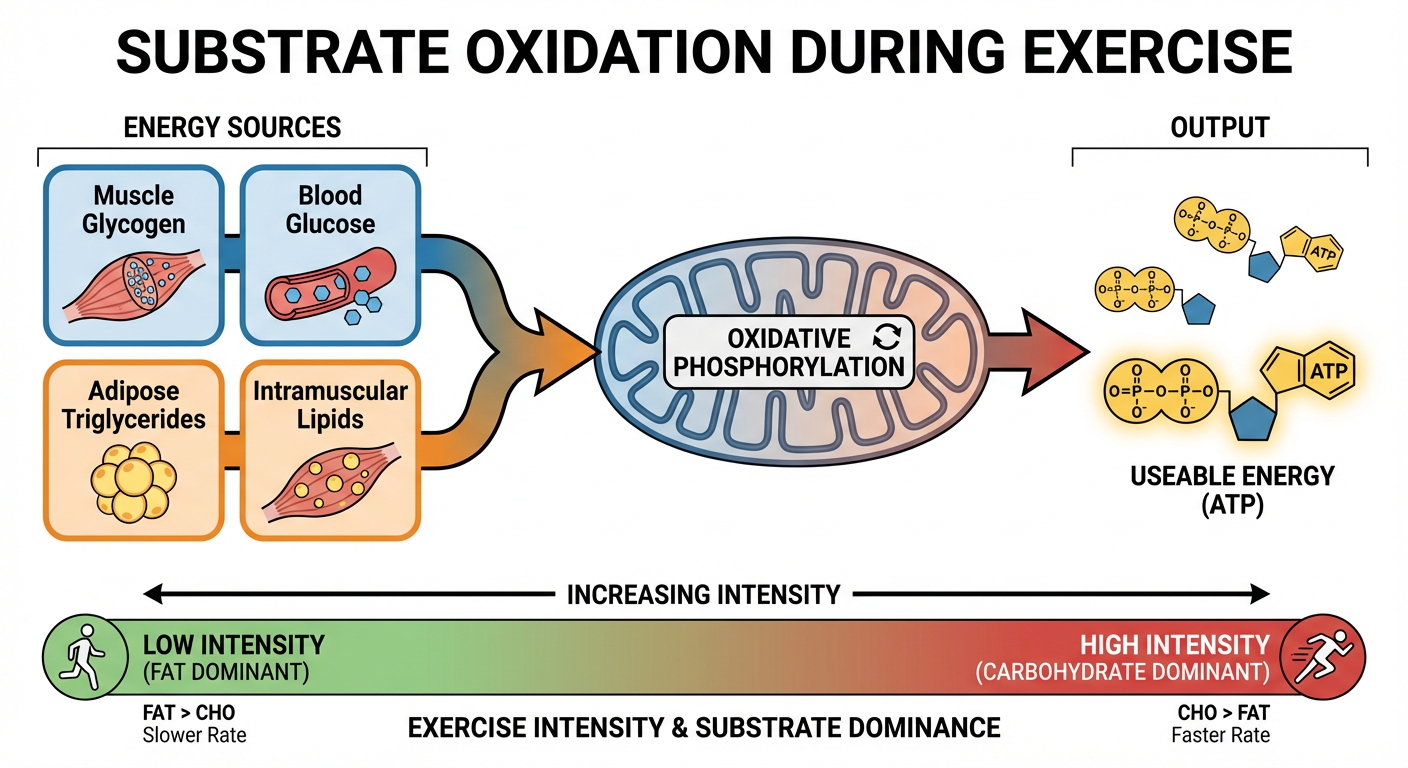
We investigate the fundamental link between muscle contraction and energy availability:
- Energy Production: The pathways of ATP synthesis (phosphocreatine, glycolysis, oxidative phosphorylation)
- Substrate Utilization: How the body uses different energy sources, including internal stores (muscle glycogen, lipids) and exogenous nutrients
- Systemic Interaction: The coupling of the cardiorespiratory system (oxygen transport) with muscular demands during exertion
Physiological Modeling & Prediction

Moving beyond simple observation, we develop mathematical and physiological models to:
- Predict physical performance and endurance capacity
- Interpret complex physiological phenomena during exercise
- Provide predictive data for cardiac health and rehabilitation status
Eccentric Exercise
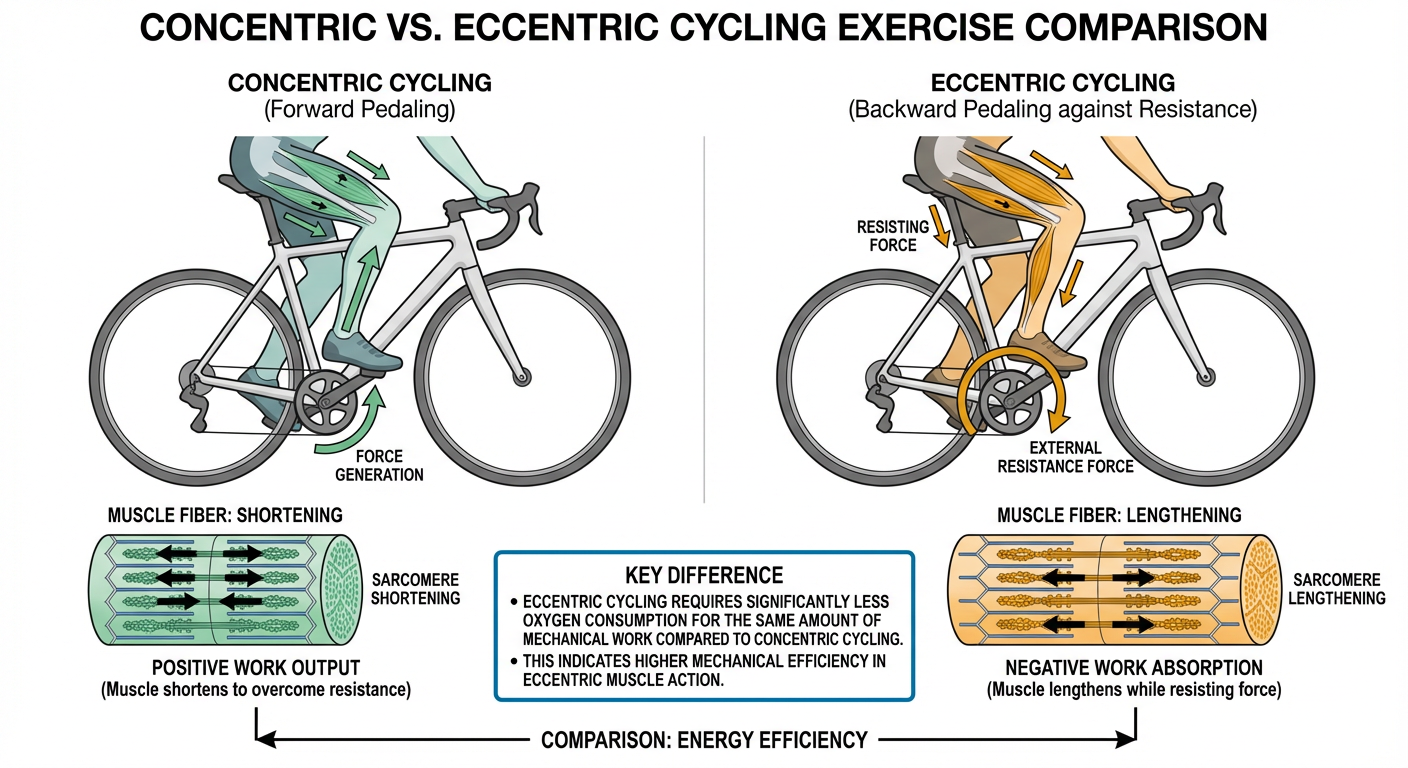
We investigate eccentric muscle contractions—where muscles lengthen under load—as a unique training and rehabilitation modality. Eccentric cycling allows high mechanical work with reduced metabolic cost, making it valuable for:
- Cardiac and pulmonary rehabilitation programs
- Strength training with lower cardiovascular demand
- Understanding muscle adaptation mechanisms
Nutrition and Metabolism
We research how specific nutritional strategies impact metabolic efficiency and endurance performance, analyzing the relationship between dietary intake and energy expenditure during effort.
Methodologies
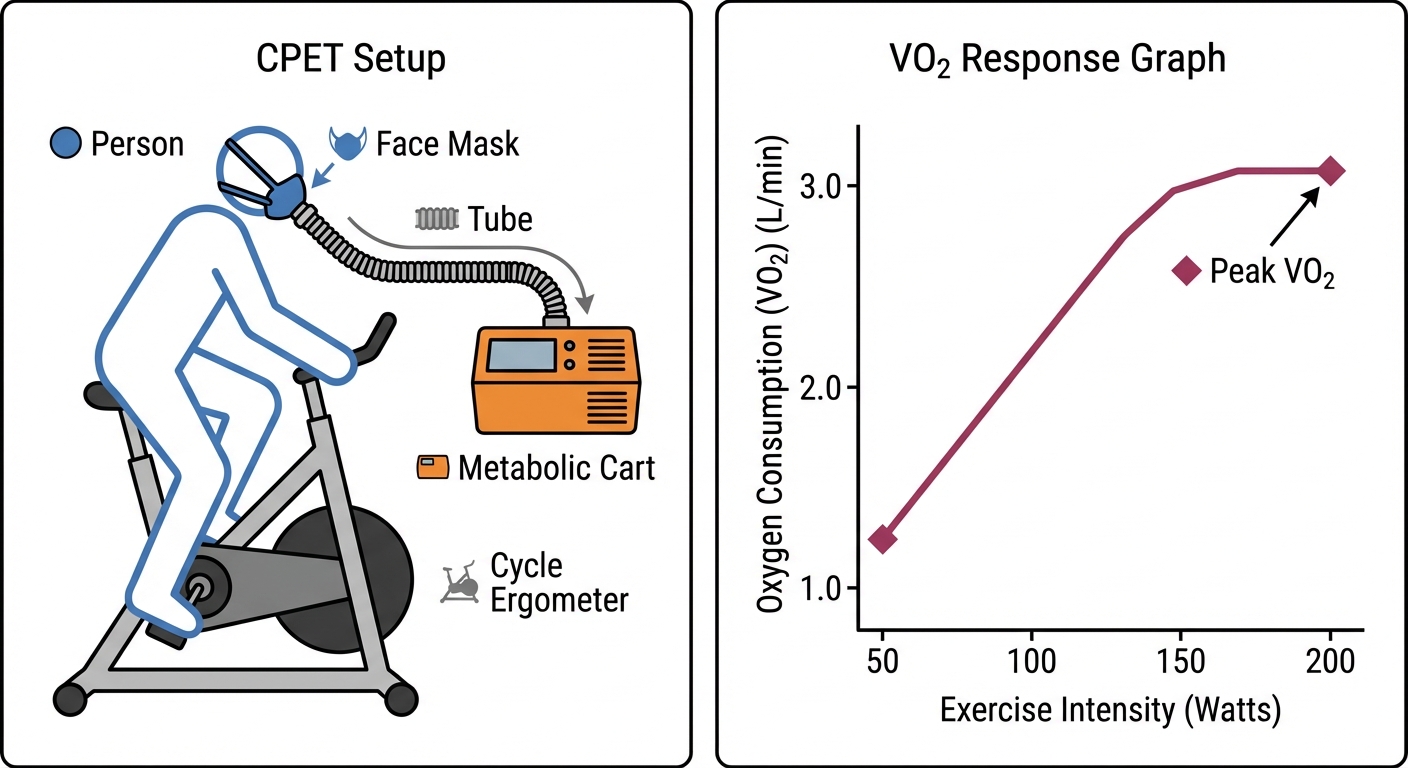
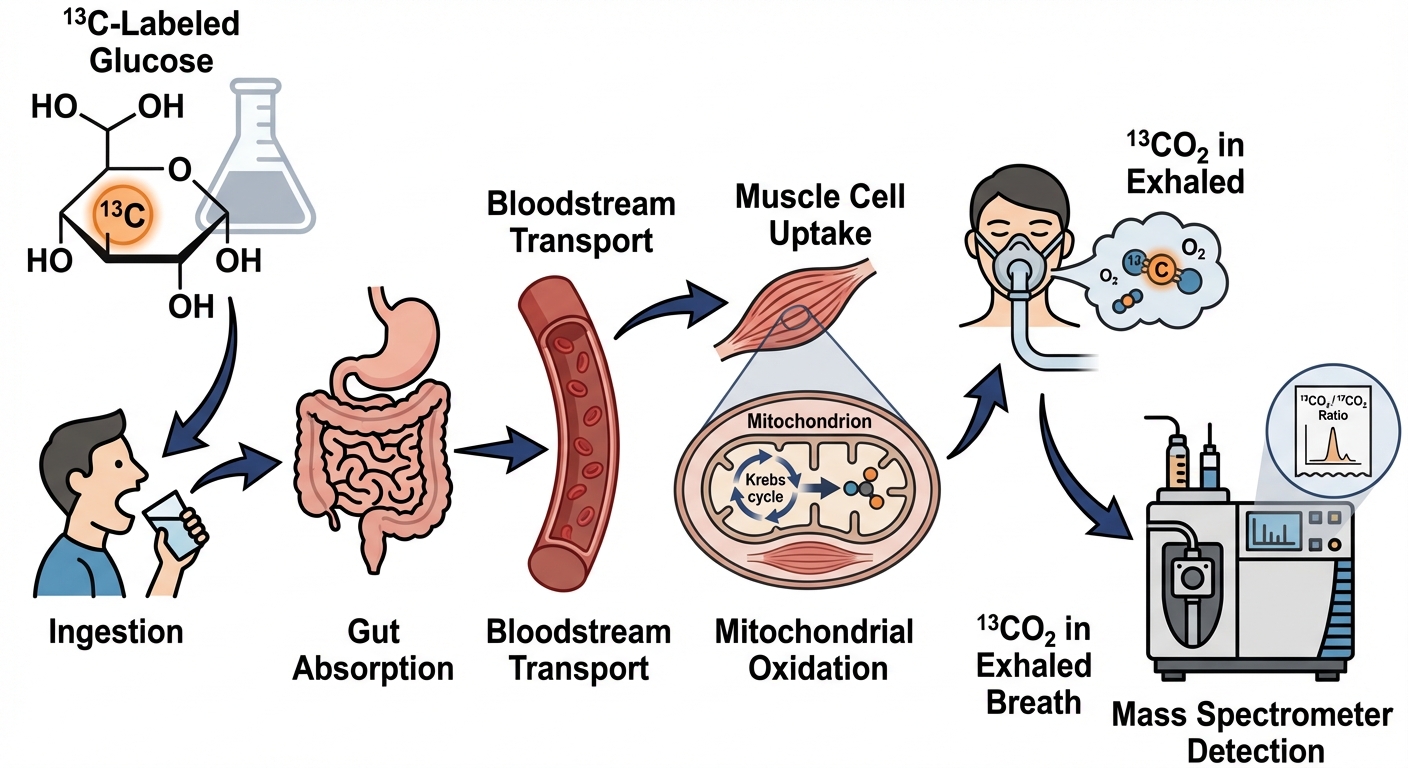
Our laboratory utilizes advanced methodologies, including indirect respiratory calorimetry combined with isotopic tracers (e.g., 13C) to precisely measure substrate oxidation during exercise.
Active Projects
Maple Syrup and Endurance Performance
Active
Investigating the impact of natural carbohydrate sources (maple syrup) on metabolic profiles and endurance performance, using isotopic tracers to quantify exogenous substrate oxidation.
Objectives:
- Compare maple syrup oxidation vs other carbohydrates
- Measure impact on endurance performance
- Analyze metabolic profiles with isotopic tracers
Running Training Load Monitoring
Active
Developing training load monitoring tools for runners in collaboration with Athletics Quebec, integrating physiological and performance data.
Objectives:
- Create training load tracking algorithms
- Validate tools with elite athletes
- Develop a mobile application
Substrate Oxidation During Exercise
Active
Investigation of carbohydrate and fat oxidation during prolonged exercise using indirect calorimetry and stable isotope tracers. Our goal is to develop standardized protocols and open-source analysis tools.
Objectives:
- Quantify substrate oxidation rates
- Develop standardized protocols
- Create open-source analysis tools
CPET Database
Active
Building a normative database for cardiopulmonary exercise testing in collaboration with Centre EPIC.
Objectives:
- Collect normative CPET data
- Develop reference equations
Eccentric Cycling as Training Modality
Active
Investigating acute and chronic adaptations to eccentric cycling as a unique training modality to improve strength and performance.
Objectives:
- Characterize acute physiological responses
- Measure chronic training adaptations
- Evaluate applications for rehabilitation
Tennis Player Assessment Battery
Active
Development and validation of a standardized test battery for tennis player assessment in collaboration with Tennis Quebec.
Objectives:
- Develop tennis-specific test battery
- Validate protocols with elite players
- Create Quebec reference norms
CUBE 5D - Shiny App for Cycling Training
Active
Development of a Shiny application for cycling training monitoring and optimization in collaboration with the Quebec Cycling Sports Federation. The application is currently in development.
Objectives:
- Design an intuitive user interface
- Integrate training prescription algorithms
- Validate the tool with competitive cyclists
Bioenergetic Modeling
Active
Creating computational models to interpret physiological data and predict athletic performance.
Objectives:
- Develop predictive performance models
- Integrate metabolic and cardiorespiratory data
- Validate models with field data
Key Publications:
- Quantifying metabolic energy contributions in sprint running: a novel bioenergetic model (Briand et al., 2025)
- Bridging inductive and deductive reasoning: a proposal to enhance the evaluation and development of models in sports and exercise science (Briand et al., 2025)
- Can popular high-intensity interval training (HIIT) models lead to impossible training sessions? (Briand et al., 2022)
Completed Projects
Hockey Performance Analytics
Completed
Applied research project in collaboration with the Montreal Canadiens to develop performance analysis and player monitoring tools.
Objectives:
- Develop hockey-specific performance metrics
- Create training load monitoring tools
- Integrate in-game performance data
Key Publications:
- In-Season Session Training Load Relative to Match Load in Professional Ice Hockey (Allard et al., 2022)
Maple and Sports Performance
Completed
Pioneering study on the use of maple products as a carbohydrate source for sports performance, establishing the foundation for current research.
Objectives:
- Characterize nutritional profile of maple products
- Evaluate glycemic response during exercise
- Compare with traditional carbohydrate sources
Key Publications:
Shoulder Injuries in Aquatic Athletes
Completed
Study of risk factors and mechanisms of shoulder injuries in swimmers and water polo players, in collaboration with Cirque du Soleil for circus arts applications.
Objectives:
- Identify biomechanical risk factors
- Develop prevention protocols
- Create functional assessment tools
Key Publications:
- Cluster analysis using physical performance and self-report measures to identify shoulder injury in overhead female athletes (Gaudet et al., 2019)
- Evolution of muscular fatigue in periscapular and rotator cuff muscles during isokinetic shoulder rotations (Gaudet et al., 2018)
- Muscle recruitment patterns of subscapularis, serratus anterior and other shoulder girdle muscles during isokinetic internal and external rotations (Gaudet et al., 2018)
Sleep and Consolidation in Diving
Completed
Study of the impact of sleep on the consolidation of complex motor skills in elite divers.
Objectives:
- Measure athlete sleep quality
- Evaluate motor learning consolidation
Key Publications:
- Temporal and spatial accuracy of reaching movements do not improve off-line (Apinis-Deshaies et al., 2023)
- Association between variations in training load, sleep, and the well-being of professional hockey players (Apinis-Deshaies et al., 2023)
Collaborations
Academic Institutions


Sport Organizations & Industry Partners




Funding Agencies



Interested in collaborating? Contact us.